
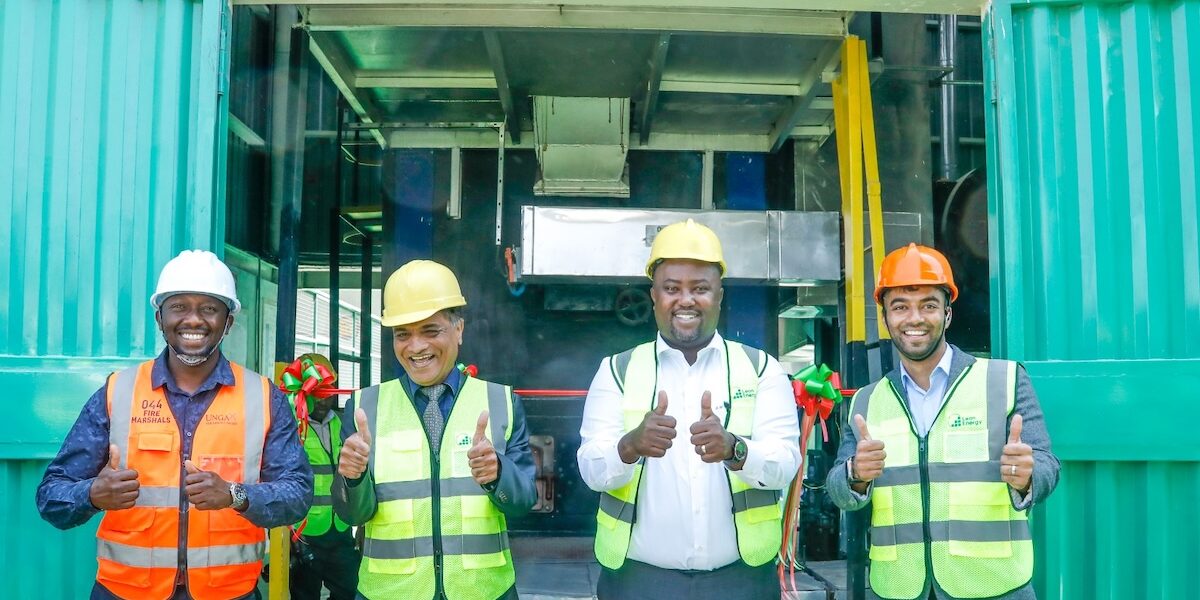
Unga Farm Care and Lean Energy Ink $1M Annual Savings Deal in Landmark Biomass Shift

Unga Farm Care (EA) has officially commissioned a high-capacity biomass boiler at its primary manufacturing facility.
The project, implemented in partnership with Lean Energy Solutions, marks a decisive pivot from imported fossil fuels to locally sourced renewable energy. The transition is projected to save the agricultural giant approximately USD 1 million (KES 129 million) annually in foreign exchange, a critical win for a sector currently grappling with a weakened local currency.
For decades, industrial thermal energy has been a significant cost center for Kenyan manufacturers, largely due to a heavy reliance on imported diesel. By replacing diesel-powered thermal systems with renewable biomass, Unga Farm Care expects to reduce its steam generation costs by 45%.
“Managing input costs and exposure to foreign exchange volatility has become critical to the long-term sustainability of manufacturing,” said Eng. Fredrick Kinge, Plant Manager at Unga Farm Care (EA) Ltd. “This transition strengthens cost predictability while reducing reliance on imported fuels, supporting long-term operational resilience.”
The project was executed under Lean Energy Solutions’ specialized Renewable Thermal Energy (RTE) partnership model. This framework allows manufacturers to bypass the high initial capital expenditure (CAPEX) usually associated with green transitions, focusing instead on a performance-based utility model.
“Industrial thermal energy is one of the biggest cost centers in manufacturing, yet it is rarely treated as a strategic lever,” noted Dinesh Tembhekar, Founder and Managing Director of Lean Energy Solutions. “This project proves that manufacturers can cut costs, reduce forex exposure, and decarbonize at the same time.”
Beyond the balance sheet, the partnership delivers a significant blow to the facility’s carbon footprint. By eliminating the consumption of 1.08 million litres of diesel per year, the initiative avoids an estimated 4,800 tonnes of CO2 emissions.
The “S” in the ESG equation is equally represented through the local value chain. The biomass system utilizes agricultural waste, creating a circular economy that is expected to generate 50,000 man-days of employment annually. These roles span the collection, processing, and transportation of biomass, providing a steady income stream for local farming communities.
The commissioning ceremony was attended by high-ranking officials from the Ministry of Energy, the Kenya Association of Manufacturers (KAM), and the Kenya Renewable Energy Association (KEREA).