
How Pan African Network for Climate Action is Redefining Climate Leadership in Africa

Across Africa, a quiet revolution is unfolding; one led not by seasoned diplomats or legacy institutions, but by young people armed with data, lived experience, and an unshakable belief that the continent’s future must be shaped by those who will inherit it. At the center of this movement stands the Pan African Network for Climate Action (PANFCA), a dynamic platform transforming youth from passive participants in climate conversations into architects of real, measurable solutions. Under the leadership of its CEO, Kelvin Muli, the organization has become synonymous with a new model of climate action, community-rooted, youth-driven, and globally influential.
Rather than treating young Africans as symbolic voices at conferences, PANFCA equips them as researchers, negotiators, innovators, and implementers. Through regional fellowships, field schools, and hands-on community programs, youth across the continent are restoring degraded ecosystems, advancing climate-smart agriculture, addressing plastic pollution, and integrating indigenous knowledge into modern adaptation strategies. The network’s philosophy is unapologetically bold: Africa’s youth are not tomorrow’s leaders, they are today’s decision-makers. This mindset has helped PANFCA build a pipeline of technically skilled, policy-literate climate champions capable of operating from village councils to global negotiation rooms.
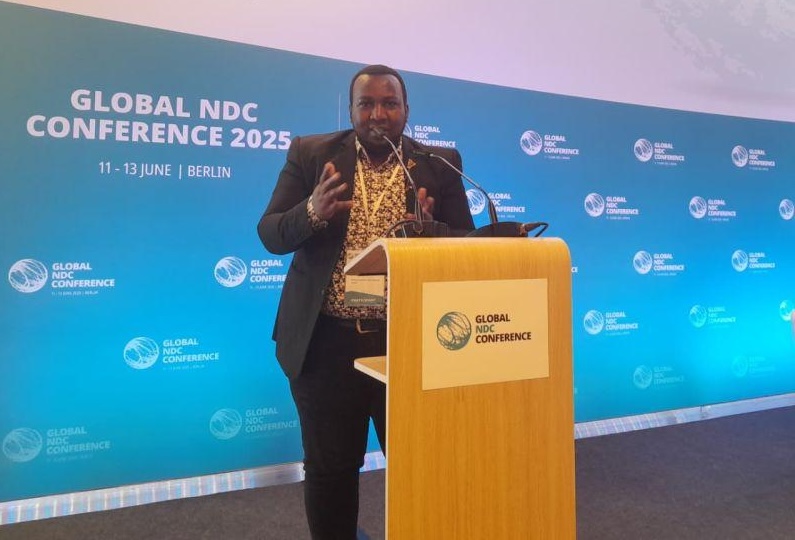
That credibility reached the international stage when Kelvin Muli represented African youth at the Global NDC Conference 2025 in Berlin, Germany, in June 2025. There, he did more than speak, he shifted the narrative. Moving beyond calls for “youth engagement,” Kelvin advocated for youth inclusion in actual decision-making spaces, emphasizing that nationally determined contributions (NDCs) cannot succeed without the innovation, energy, and frontline knowledge of young people. His message resonated across delegations: climate policy designed without youth is policy designed without the majority of Africa. By asserting youth presence in negotiation rooms not as observers but as contributors, he helped redefine how governments and institutions view intergenerational leadership.
What sets PANFCA apart is its refusal to separate policy from people. The organization understands that credible climate solutions begin in communities: in farmers adapting to erratic rainfall, in coastal youth restoring mangroves, in indigenous knowledge guiding conservation, and in young researchers translating local evidence into national strategies. Kelvin’s leadership bridges these worlds seamlessly, connecting grassroots realities with global frameworks and ensuring African stories inform international agendas rather than being sidelined by them.
Today, PANFCA stands as more than a network; it is a continental blueprint for how youth power can drive systemic change. At a time when climate discourse often feels abstract and distant, the organization proves that solutions already exist on the ground and that young Africans are ready to lead them. In elevating youth from the margins to the main table, Kelvin Muli and PANFCA are not simply participating in the climate movement; they are redefining who leads it.