
Kenya already stands out in Africa for its heavy reliance on renewables. Recent statistics show that roughly 80 percent of the country’s electricity mix comes from renewable sources, led by geothermal, hydro and wind. At the same time, demand for electricity is rising as more homes, businesses and industries connect to the grid and seek alternatives to high and volatile power costs. This combination, strong renewable resources and growing energy needs makes the question of how to finance new infrastructure particularly urgent.
Green bonds are one answer that is gaining momentum. They are conventional debt instruments whose proceeds are earmarked for projects with clear environmental benefits, such as renewable energy, energy efficiency or clean transport. Issuers commit to using the funds for eligible projects and provide reporting on both financial performance and environmental impact. This structure gives companies access to longer-term, purpose-linked capital, while investors gain transparency on how their money is used.
Globally, the sustainable bond market has grown from almost nothing 15 years ago to a cumulative total of around USD 6 trillion in green, social, sustainability and sustainability-linked bonds. A 2025 World Bank market update estimated that labelled sustainable bonds had reached about USD 6.3 trillion in cumulative issuance, with green bonds accounting for the largest share and emerging markets capturing a rising portion of activity. Sustainability-linked debt is now a mainstream way of funding long-term assets rather than a niche product.
Across Kenya, the link between green finance and real-world infrastructure is becoming clearer. Telecom towers, commercial buildings, factories and farms are adopting grid-tied and off-grid solar systems to reduce dependence on diesel and manage electricity costs. Industry analyses point to rapid growth in solar capacity, driven by falling panel prices, supportive regulation and rising demand for reliable, clean power. When such projects are financed through green bonds, the cost and tenor of capital can better match the long life of solar and energy-efficient equipment, reducing pressure on short-term borrowing.
Recent transactions in Kenya’s telecom sector illustrate how this model works in practice. In late 2025, Safaricom issued its debut green bond under a domestic medium-term note programme. The offer sought KSh 15 billion but attracted applications of about KSh 41.4 billion, leading the company to exercise a KSh 5 billion greenshoe and take up KSh 20 billion in total – a subscription of roughly 176 percent. Proceeds are earmarked for projects such as solarisation of network sites, energy-efficient upgrades, and other investments aligned to a published green financing framework that is subject to independent review and ongoing reporting.
This bond followed earlier sustainable lending activity. In 2023 and 2024 Safaricom secured sustainability-linked loan facilities from a consortium of local banks, with the total reaching KSh 30 billion. These loans link pricing to progress against defined. environmental, social and governance targets, including reducing carbon emissions and strengthening inclusion metrics. Together, the bond and the loans offer a case study of how a large issuer can align its financing strategy with wider sustainability objectives while tapping both capital markets and bank funding.
For households and small enterprises, the benefits of such investments appear in more reliable services and a cleaner local environment. Solar and hybrid systems can reduce outages and dependence on fuel deliveries for critical infrastructure such as telecom sites, health facilities and water schemes. Replacing diesel generators with renewables cuts local air and noise pollution, improving conditions for communities near these installations. Over time, better-managed energy costs also support more stable pricing and continued investment in coverage and capacity.
For investors, green bonds and sustainability-linked loans offer familiar features -coupons, maturities, credit risk – combined with additional information on environmental performance. Transactions are typically guided by published criteria, external reviews and post-issuance reporting, which help address concerns about “greenwashing” and allow investors to track progress against stated goals. As scrutiny of sustainability claims rises, this transparency is becoming a differentiator for issuers seeking long-term, patient capital.
Kenya’s strong renewable base, growing pipeline of clean-energy projects and access to both local and international investors place it in a favourable position to use green bonds and sustainable loans more widely. When designed and implemented rigorously, these instruments can bridge the gap between the long-term nature of energy and infrastructure investments and the medium-term horizons of traditional lending – aligning financial discipline with environmental responsibility.
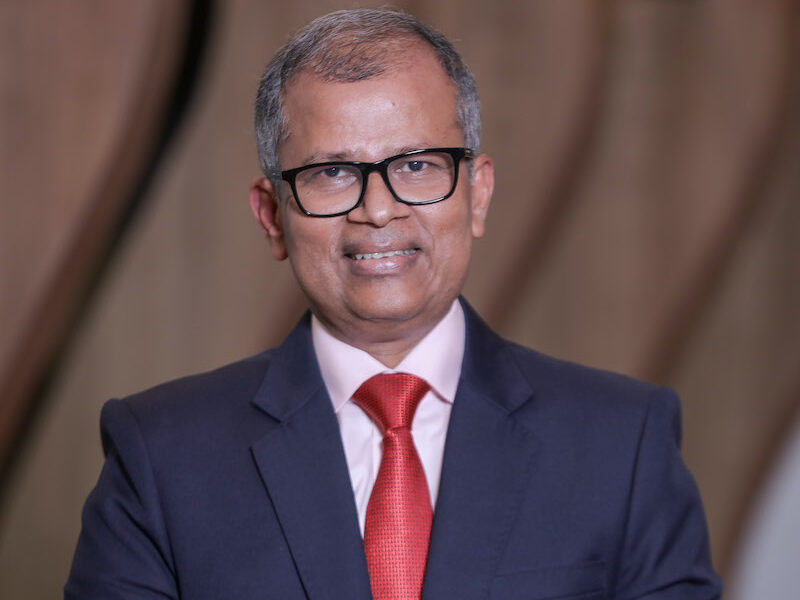
Dilip Pal is the Group Chief Finance Officer, Safaricom PLC