
For commercial real estate developers and fleet operators across Africa, the challenge is twofold and relentless: navigating the crippling disruptions of grid instability (load shedding) while managing the skyrocketing logistics costs driven by volatile fossil fuel prices. The traditional reliance on diesel generators is quickly becoming a financial liability rather than a safety net.
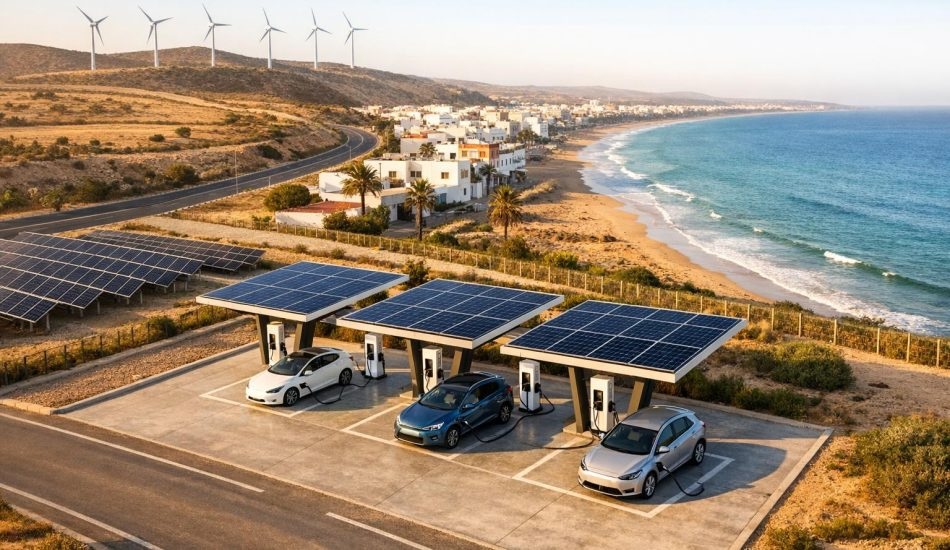
In this volatile landscape, the integration of Solar Photovoltaic (PV) systems with Electric Vehicle (EV) charging infrastructure is no longer just a corporate social responsibility (CSR) exercise. It has evolved into a critical strategy for Business Continuity. By decoupling operations from an unreliable grid and unpredictable fuel markets, African businesses secure not only their energy supply but their long-term operational viability.
The Technological Foundation: Safety First in Harsh Environments
Before analyzing the financial returns, decision-makers must address the elephant in the room: operational reliability. Africa’s diverse climate—ranging from extreme heat in the Sahel to high humidity in coastal regions—imposes severe stress on electrical components. A standard installation designed for temperate climates will degrade rapidly here, leading to system failure or, worse, fire hazards.
Establishing a reliable microgrid requires more than just high-capacity panels; it demands rigorous protection for the entire electrical ecosystem. Given the intense environmental conditions, infrastructure must adhere to strict safety standards, such as IP66 protection ratings against dust and water ingress, and Module-Level Rapid Shutdown (RSD) capabilities to protect maintenance personnel.
Industry specialists like BENY provide advanced solar transmission and distribution solutions, ensuring that EV charging stations and PV systems operate safely without risking fire hazards or downtime due to component failure. For a commercial fleet, the choice of high-quality DC protection components is the difference between a resilient asset and a stranded liability.
Commercial Viability: Analyzing the ROI for Fleets
The economic argument for shifting to a “Solar-Storage-Charging” model is rooted in the Total Cost of Ownership (TCO). While the initial Capital Expenditure (CapEx) for EV fleets and solar infrastructure is higher than purchasing internal combustion engine (ICE) vehicles, the Operational Expenditure (OpEx) tells a different story.
Fuel vs. Sun: Diesel costs are a recurring, unpredictable expense. Solar energy, once the infrastructure is paid for, is essentially free, stabilizing energy costs for 20+ years.
Maintenance Reduction: EVs have fewer moving parts than ICE vehicles, reducing maintenance downtime by approximately 40%.
Asset Utilization: Smart charging systems allow businesses to monetize their infrastructure by offering charging services to the public or employees during non-peak fleet hours.
Policy Drivers & The Future of African Mobility
The shift towards electrified infrastructure is not happening in a vacuum. It is supported by a growing framework of policy incentives and international finance aimed at leaping over traditional fossil-fuel developmental stages.
The transition is further validated by on-the-ground implementation across the continent. As detailed in the United Nations Environment Programme(UNEP)’s overview of active e-mobility projects, international bodies are already operationalizing electric transport frameworks in key markets like Kenya, South Africa, and Rwanda. For local businesses, aligning with these globally backed initiatives opens doors to green financing grants and lower-interest loans that are unavailable to traditional fossil-fuel-dependent projects.
The convergence of solar power and electric mobility represents the most significant infrastructure shift in Africa’s recent history. For business leaders, the window to gain a competitive advantage is open. By investing in resilient, safety-first infrastructure today, companies do more than just bridge the power gap—they future-proof their operations against the uncertainties of tomorrow.