
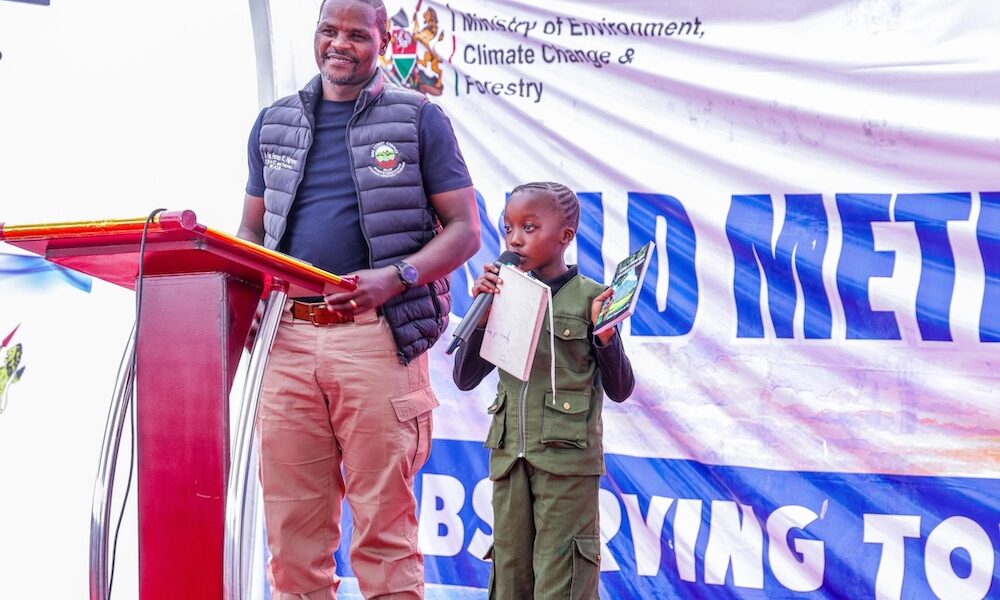
Kenya Advances Climate Resilience Through Enhanced Weather Forecasting and Early Warning Systems

The Kenyan government has reaffirmed its commitment to strengthening weather and climate services, describing accurate meteorological data as foundational to protecting livelihoods, ensuring food security, and building resilience against a changing climate.
Speaking at the joint commemoration of World Meteorological Day 2026 and the Farmers Open Day held at KALRO Grounds in Njoro, Environment, Climate Change and Forestry Cabinet Secretary Dr. Deborah Barasa called meteorological data “the first line of defense for our economy,” underscoring its critical role in protecting lives, property, and the environment amid escalating climate variability.
Dr. Barasa pointed to recent extreme weather events, including severe rainfall and rising lake levels in the Rift Valley, as stark evidence of climate change’s growing impact on Kenya.
A landmark announcement at the event was the transition of the Kenya Meteorological Department into the Kenya Meteorological Service Authority (KMSA). Dr. Barasa described the shift as a major milestone that will unlock the modernisation of observation systems, deepen global partnerships, and significantly improve the delivery of actionable weather and climate information to the public.
The Cabinet Secretary also announced the government’s commitment to implementing the Early Warnings for All initiative, with an ambitious target of ensuring every Kenyan receives timely, life-saving weather alerts by 2027. She called on farmers to take advantage of seasonal forecasts and agro-meteorological advisories to boost productivity and strengthen climate resilience.
Mr. Edward Muriuki, Acting Director at Kenya Meteorological Service, highlighted the role of technology in transforming forecast precision. He noted that the deployment of sophisticated computer models, enhanced technical expertise, and the capacity to generate highly localised forecasts are collectively pushing accuracy toward near-perfect levels.
Principal Secretary for Environment and Climate Change Dr. Eng. Festus K. Ng’eno reinforced the urgency of sustained investment in observation infrastructure, early warning mechanisms, and climate-smart solutions. He noted that Kenya continues to grapple with erratic rainfall, rising temperatures, and flooding, challenges that have affected communities, infrastructure, and ecosystems across the country.
The event, held under the theme “Observing Today, Protecting Tomorrow,” also saw the launch of the State of the Climate in Kenya 2025 Report, which documents a warming trend and escalating climate risks. The report adds urgency to calls for strengthened adaptive measures at both national and county levels.
The commemoration brought together a high-level delegation including Agriculture Principal Secretary Dr. Paul Ronoh, Nakuru County Deputy Governor Hon. David Kones, Nakuru County Commissioner Loyford Kibaara, World Meteorological Organization Representative Hlobsile Sikhosana, and KALRO Director General Dr. Patrick Kitiem, among other senior leaders and stakeholders.