
Woodchuck teams up with Walbridge to advance customers’ construction sustainability goals

A new collaboration between Woodchuck and Walbridge is demonstrating how data-driven waste management can significantly improve sustainability outcomes on large-scale construction projects, with early success reported at a major facility for Ford Motor Company in Marshall, Michigan.
The initiative, launched to support Ford’s waste-reduction goals at its new manufacturing site, leverages Woodchuck’s AI-powered platform to track and optimize the handling of construction waste materials. Within the first three months, the program has already delivered measurable results, achieving 40% of projected materials-related savings while improving visibility into waste streams, diversion rates, and operational efficiency.
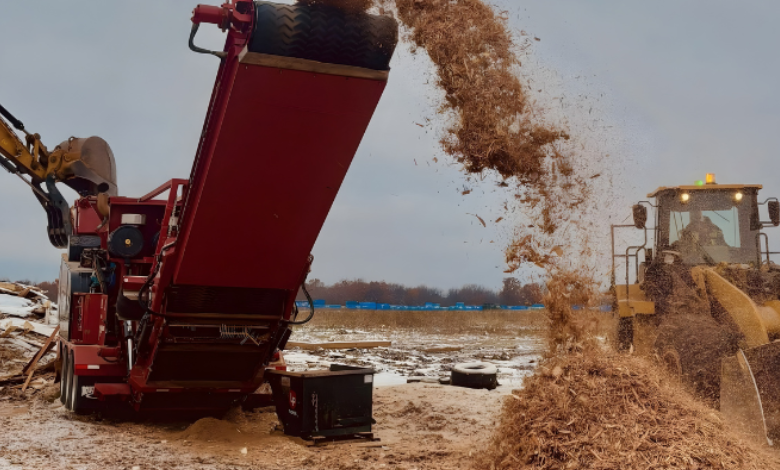
Construction waste – particularly on large industrial projects – has long been a challenge due to fluctuating material volumes and inconsistent waste streams. At the Marshall site, wood waste emerged as a key issue, driven by a constant influx of crating, pallets, and rigging materials of varying sizes and compositions.
Walbridge identified an opportunity to address these complexities through real-time data insights. By adopting Woodchuck’s platform, project teams gained continuous visibility into container levels, material composition, and end destinations of diverted waste. This shift enabled more predictable, cost-effective, and environmentally responsible waste handling.
“Transparent, real-time communication allows our team to adapt quickly to changing material waste streams,” said Sander Mathijs, Sustainability Manager at Walbridge. “We now have complete visibility into what is diverted from landfills and where it ultimately goes, enabling measurable sustainability outcomes.”
The program has already diverted thousands of tons of materials – including wood, cardboard, plastic, and metal – away from landfills. Over the full course of the project, Woodchuck is expected to redirect approximately 8,000 tons of wood and an additional 1,000 tons of other materials.
Beyond environmental benefits, the initiative is also reducing hauling costs and improving operational planning. The platform integrates into existing workflows with minimal on-site labor, allowing teams to scale capacity and adjust to evolving project demands.
Walbridge executives say the system has transformed their approach to waste management. “In just a few months, we’ve moved to a process that is measurable, trackable, and easy to manage,” said Ross Linton, Group Vice President at Walbridge. “Our team can now plan ahead, driving both efficiency and sustainability.”
The success of the Marshall project suggests broader applications across the construction sector. Designed for large, multi-phase developments, the Woodchuck platform can be deployed across multiple sites, offering consistent visibility and control over waste streams.
As sustainability commitments intensify across industries, construction firms are under increasing pressure to reduce landfill dependency and document environmental performance. Woodchuck’s detailed reporting capabilities provide verifiable data for both internal tracking and client-facing sustainability metrics.
Woodchuck CEO Todd Thomas described the partnership as a shift in mindset for the industry. “Walbridge is showing what happens when waste is treated as a strategic input rather than an afterthought,” he said. “By combining AI insights with real-time data, they’re improving productivity, reducing costs, and increasing project certainty.”
With early results exceeding expectations, Walbridge plans to expand the Woodchuck-enabled approach across future projects in automotive, manufacturing, and advanced industrial sectors.
The collaboration points to a broader trend: the integration of digital tools and sustainability practices is no longer optional but essential for modern construction. As demonstrated in Marshall, combining AI with operational workflows can turn one of the industry’s most persistent challenges into a measurable competitive advantage.