
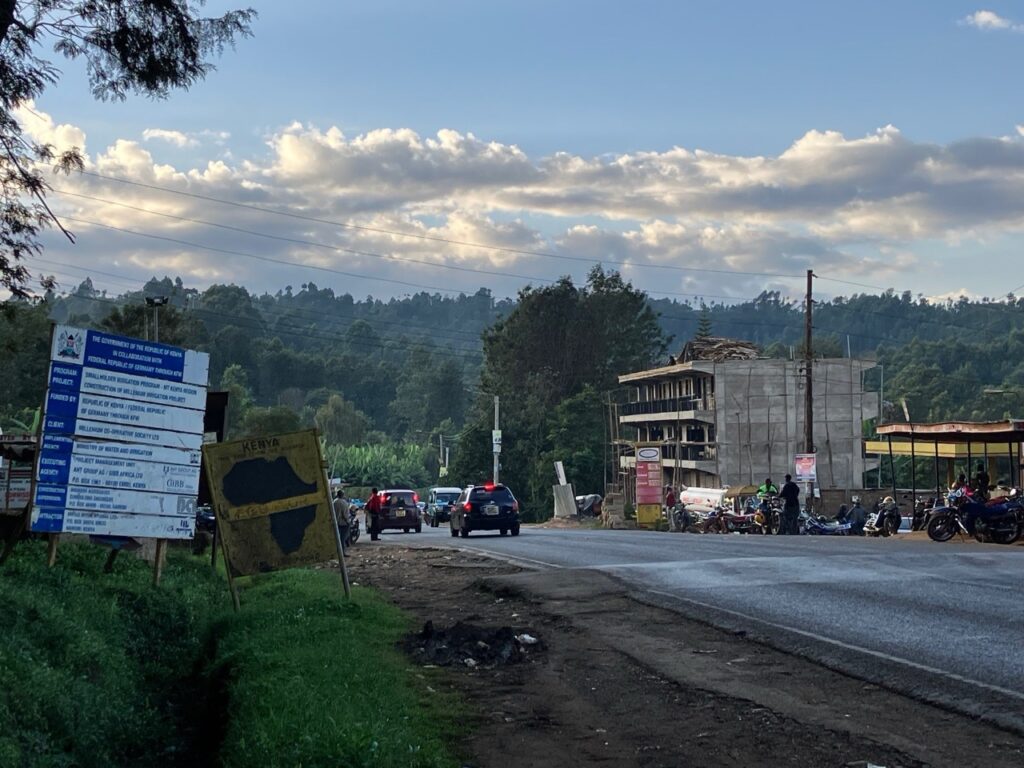
Honda Spinoff PathAhead is Building a Desert Sand Road Material Factory in Kenya
Rising Sand, the world's first artificial road aggregate made from desert sand, is headed for a Kenya production plant by 2028.

Africa has a road problem. Only about 20% of roads across the continent are paved, and the ones that are paved wear out fast — typically within a decade — because of inconsistent aggregate quality, difficult climates, and the high cost of maintenance. That means higher transport costs, slower logistics, and communities cut off from markets, schools, and hospitals.
Honda thinks it has found a fix. And unusually, it involves desert sand.
A startup born inside Honda
On March 31, 2026, Honda Motor Co., Ltd. announced the establishment of PathAhead Co., Ltd., a new independent company spun out of IGNITION, Honda’s internal new business creation programme. The IGNITION programme started in 2017 as an initiative to encourage Honda associates to create new businesses within the company, and in 2020 added the option for qualifying associates to establish independent startup ventures. Honda limits its own equity stake in these spinouts to no more than 20%, ensuring the new companies operate independently.
PathAhead was founded by Masayuki Iga, who spent his career at Honda working on automotive materials and mobility-related fundamental research. Iga says he established PathAhead out of a desire to leverage the technologies and insights he built at Honda to swiftly and directly address challenges facing society.
The challenge he chose: Africa’s roads.
What is Rising Sand?
PathAhead’s flagship product is called Rising Sand — described as the world’s first artificial aggregate made from desert sand.
To understand why this matters, you need to understand what aggregate is. Aggregate is the gravel and sand mixed into asphalt and concrete to give it strength and structure. It is the backbone of every road, every pavement, every building foundation. The world currently consumes somewhere between 40 and 50 billion tonnes of it every year. The problem is that natural aggregate — quarried from rivers, mountains, and coastlines — is running out faster than the Earth replaces it, and its quality varies wildly depending on where it was mined.
Desert sand, which is abundant across Africa, has always been considered useless for construction. Its grains are too fine and too round — they don’t bond together well enough to provide structural strength.
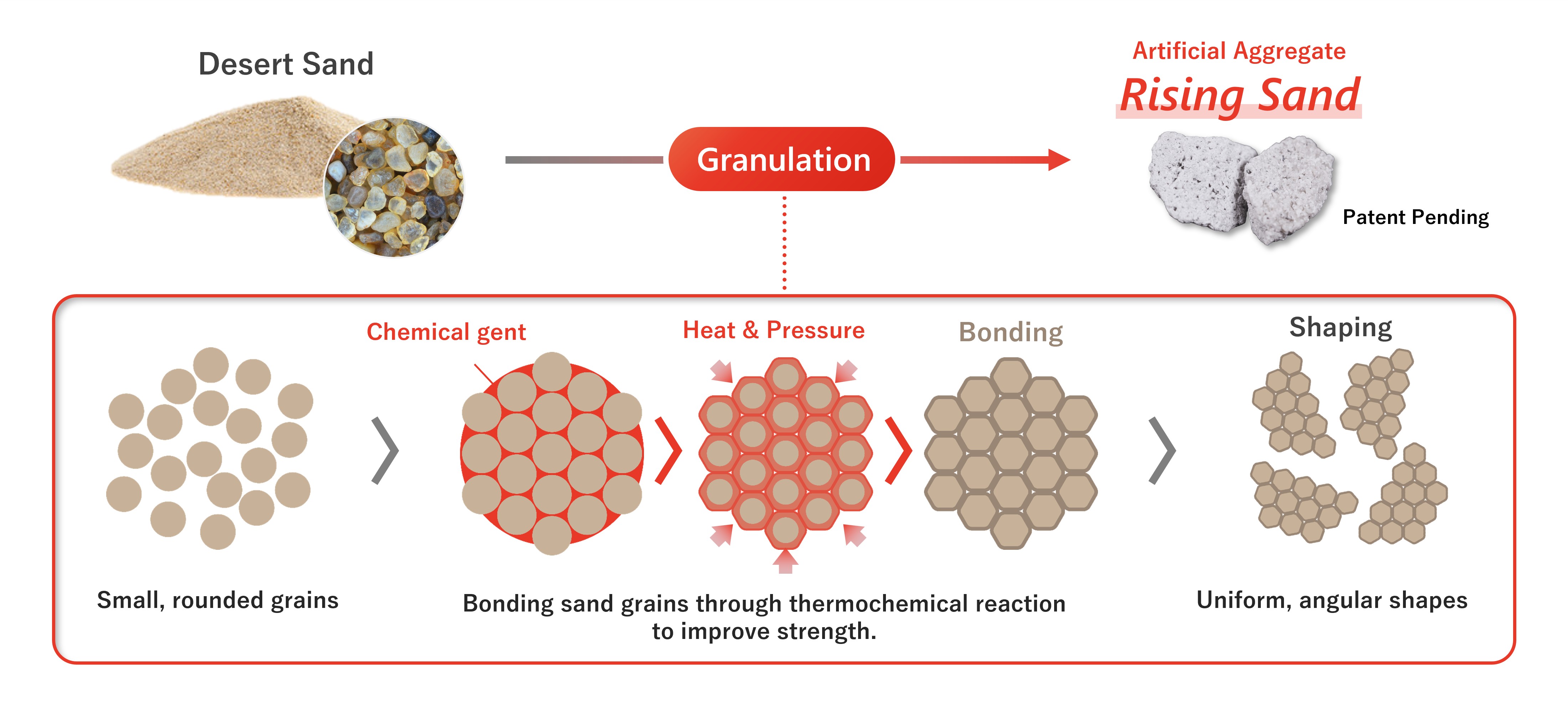
PathAhead’s technology solves that. Rising Sand is produced by granulating the round grains of fine desert sand, which have a diameter of approximately 100 micrometers, into larger granulated sand clusters with a diameter of several tens of millimetres, using PathAhead’s original, patent-pending granulation technology. This process reduces variations in the size and shape of the sand clusters, thereby increasing their strength as aggregate.
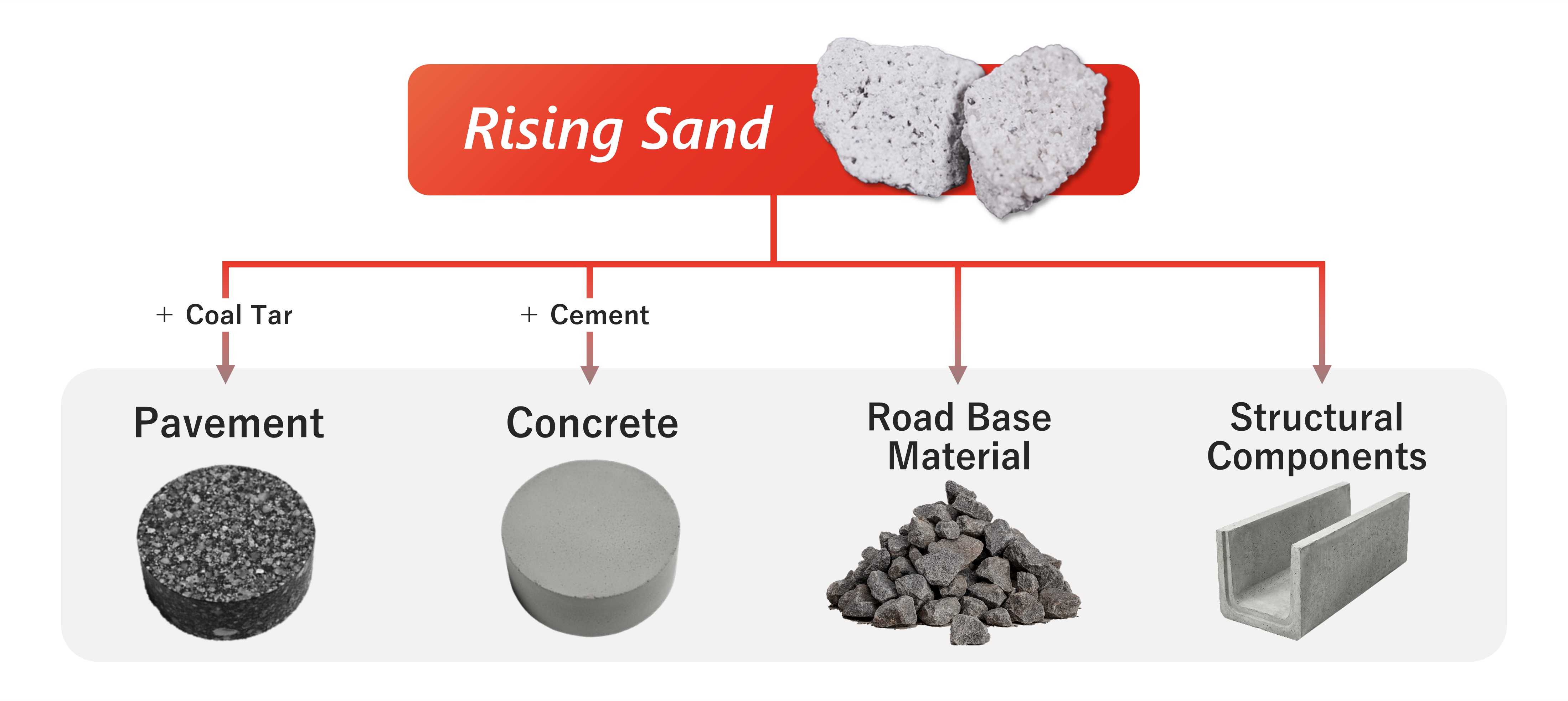
Think of it like this: instead of trying to build with loose talcum powder, PathAhead’s process clumps and bonds that powder into uniform, hardened pellets that behave like proper gravel. The result is a high-hardness, consistent material suitable for road paving, concrete, and road base layers.
The numbers that matter
While roads built with conventional natural aggregates typically have a service life of about 10 years, roads built with Rising Sand are expected to achieve a service life of more than 20 years, and the lifecycle cost is estimated to be approximately 60% lower compared to conventional roads using natural aggregates.
That 60% figure is significant. It is not just a lower road construction bill — it means governments and counties repave half as often, meaning budget that currently disappears into pothole repairs can go elsewhere. PathAhead also says it aims to price Rising Sand competitively with conventional natural aggregates by sourcing materials locally, which matters for markets where imported construction materials add foreign exchange pressure.
Kenya is the chosen base — and here is why that is significant
PathAhead’s commercialisation roadmap puts Kenya at the centre of everything.
As the first step toward commercialisation, PathAhead will conduct demonstration testing of Rising Sand for road paving applications over approximately three years, starting in Kenya in 2027, then in Tanzania, followed by South Africa. Based on those results, PathAhead will start mass production at a plant scheduled to be constructed in Kenya in 2028, then in Tanzania, then South Africa.
Kenya was not chosen arbitrarily. The country has active road development programmes, a growing construction sector, and proximity to arid and semi-arid zones where desert sand is readily available. It also has an increasingly favourable policy environment for green innovation, which aligns with PathAhead’s sustainability framing. Building the first production plant in-country, rather than importing a finished product from Japan, means local jobs, local sourcing, and local supply chains — not a colonial-era extractive model.
The bigger picture: sand scarcity is a real crisis
This story connects to a global issue that rarely makes headlines in East Africa but is worsening fast. Natural construction sand — the type mined from rivers and coastlines — is one of the most consumed natural resources on Earth, second only to water. Over-extraction is already causing riverbed collapse, coastal erosion, and ecosystem damage across parts of Sub-Saharan Africa, including Kenya’s own rivers.
A material that makes abundant, previously unusable desert sand into high-quality construction aggregate is not just a road story — it is a resource story, a climate story, and an economic story rolled into one.
Keiji Otsu, President of Honda R&D Co., Ltd., noted that PathAhead represents Honda’s broader push to apply its engineering expertise to infrastructure challenges, adding that the company will offer ongoing support while accelerating co-creation with internal and external partners.
What comes next
PathAhead’s timeline is tight. Demonstration testing in Kenya begins in 2027. A production plant breaks ground in 2028. The company will verify workability, durability, and consistency of quality while considering local climate and traffic conditions in each country, aiming to establish specifications that satisfy road pavement material requirements for mass production.
Whether the material performs as promised under Kenya’s road conditions — heavy lorry traffic, equatorial rains, variable terrain — will be the real test. The company acknowledges that demonstration testing is not a formality; it is the proof point that will determine whether the technology scales or stalls.
For Kenya, a country that has been the site of too many infrastructure promises that dragged or collapsed, what PathAhead is offering is notable less for its ambition and more for its specificity. A named production location. A named year. A named test country. The details are on record.
Now the road-building begins.