Charging Your EV at 4 Cents a Unit Changes Everything
Kenya's electricity bill is the single biggest brake on EV adoption. Nuclear could release it.

Run the numbers on your last electricity bill. Now imagine it dropped by 80%.
That is not a fantasy figure. That is Kenya’s Nuclear Power and Energy Agency’s projected output cost for the Siaya plant — 4 to 5 US cents per kilowatt-hour, against the current residential rate of roughly 22 cents. For the average Kenyan household, that headline number sounds abstract. For anyone running an electric vehicle, a charging station, or a fleet of electric matatus, it is the most important number in the country’s energy conversation right now.
Because here is the truth that the nuclear debate keeps burying: the EV transition in Kenya does not just need cars. It needs the electricity those cars run on to be cheap enough to make the economics undeniable. We are not there yet.
What you are actually paying now
At current rates, charging a mid-range EV with a 60 kWh battery from empty to full costs roughly KES 1,700. That same journey in a petrol car costs around KES 2,500 to KES 3,000 depending on fuel prices. The saving is real — but it is not dramatic enough to convert the sceptic, not compelling enough to move a fleet operator, and not cheap enough to make public charging a genuinely profitable business at scale.
The economics work at the margins. They do not yet work loudly enough to accelerate adoption at the pace Kenya needs.
What 4 cents per unit actually does
At nuclear’s projected output cost, that same 60 kWh charge drops to under KES 400. The running cost gap between electric and petrol stops being a moderate advantage and becomes an overwhelming one. We are talking about the kind of difference that changes behaviour — not just for early adopters with environmental convictions, but for the matatu owner calculating margins, the boda boda rider watching fuel spend, the logistics company modelling fleet costs.
This is where the EV conversation in Kenya has to go. Right now we are selling electric vehicles on values — cleaner, quieter, better for the planet. All true. But values alone do not move markets at scale. Price does. And cheap, firm electricity from nuclear makes the price argument so decisive that the conversation shifts from “should I consider an EV” to “why am I still buying petrol.”
The public charging business case
The transformation is even sharper for charging infrastructure operators.
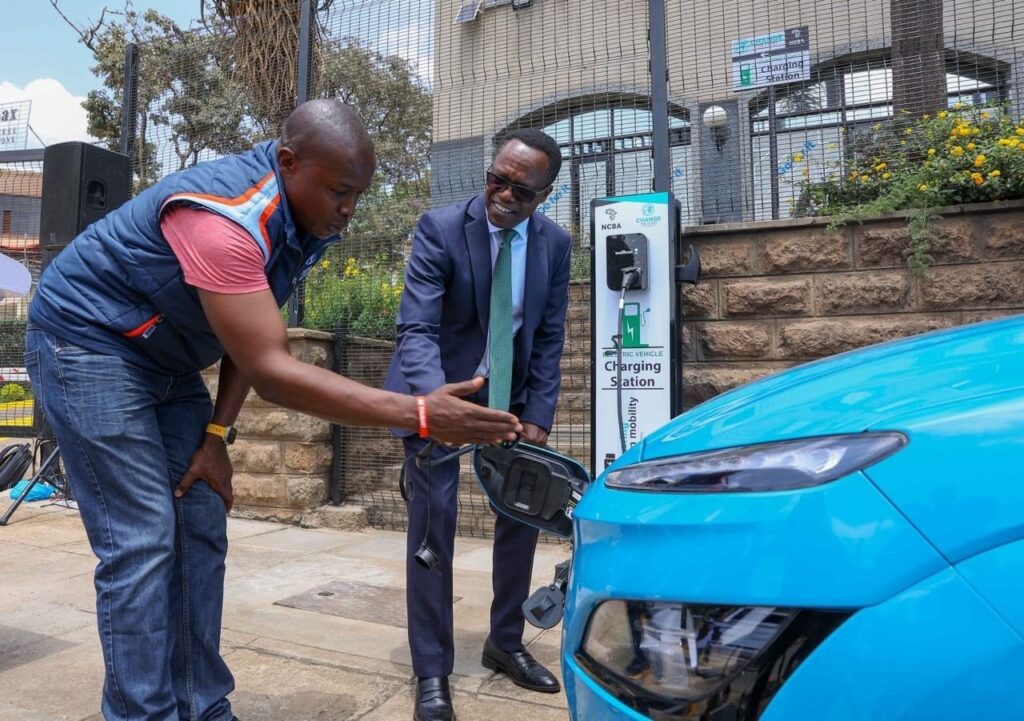
Building a public fast charging station in Kenya today requires buying electricity at commercial rates, adding margin, and pricing in a way that makes EV charging competitive with petrol while still covering costs and capital. That arithmetic is tight. It explains why the public charging network is still thin outside Nairobi.
At 4 to 5 cents per unit on the input side, the charging station business model opens up completely. Operators can price aggressively — undercutting petrol significantly — and still make real margin. That margin funds more stations. More stations reduce range anxiety. Reduced range anxiety accelerates EV adoption. The whole flywheel starts spinning, and it starts with the unit cost of electricity.
Fleet electrification becomes obvious
The sector where cheap electricity hits hardest is fleets — matatus, boda bodas, delivery vehicles, school buses, government cars.
Fleet operators are pure economics calculators. They do not buy on brand loyalty or environmental values. They buy on total cost of ownership over a vehicle’s working life. Currently, electric fleet vehicles have higher upfront costs that are offset by lower running costs — and the running cost advantage, while real, requires patient capital and long payback periods to justify.
Halve the electricity cost and that calculation changes completely. The payback period shortens. The business case strengthens. The conversation at every fleet procurement office in Kenya shifts from “interesting but not yet” to “we need to move now.”
One condition worth stating clearly
None of this lands if the cheap generation cost never reaches the consumer. Kenya Power’s history of levies, markups, and opaque tariff structures means that electricity generated at 4 cents can still arrive at your meter at 22. That is not a nuclear problem — it is a distribution and regulation problem that exists independently.
The nuclear conversation and the Kenya Power reform conversation need to happen simultaneously. Cheap generation without distribution reform simply fattens the intermediary. Both fights are worth having. And cheap nuclear electricity, if it arrives, creates public pressure that makes the second fight easier to win.
The electricity bill is not a side issue in the EV transition. It is the issue. Get it right and everything else follows.