
Guardians of the Earth Fellowship Signals a New Era of Homegrown Climate Leadership — Africa Bets on Its Youth

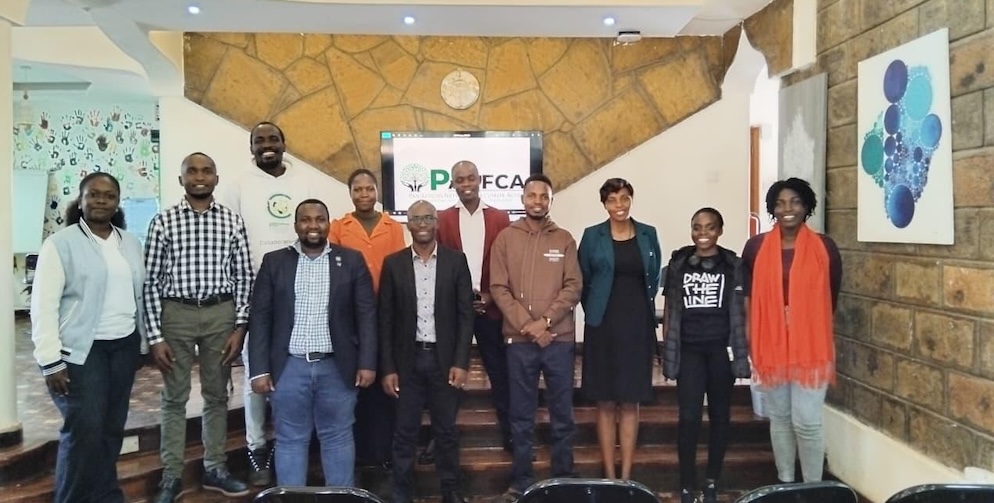
A new chapter in Africa’s climate leadership unfolded this week with the official launch of the Guardians of the Earth Fellowship Programme, a continent-wide initiative positioning young Africans at the forefront of climate solutions grounded in local knowledge, science, and policy influence.
Convened by the Pan African Network for Climate Action and led by its CEO, Mr Kelvin Muli, the fellowship arrives at a pivotal moment for the continent. As climate shocks intensify, from prolonged droughts to devastating floods. Africa faces disproportionate impacts despite contributing the least to global emissions. Organizers describe the programme not simply as a training course, but as a movement designed to equip youth leaders, researchers, communicators, and advocates with the skills to transform community knowledge into national and continental action.
Central to the fellowship’s vision is a partnership with Lukenya University, widely recognized for its emphasis on sustainability, dryland innovation, and community-centered education. Situated in Kenya’s semi-arid landscape, the university has built a reputation for applied research that directly addresses the realities of vulnerable communities. Under the leadership of Vice Chancellor Judith Adikinyi Wafula, the institution has championed practical climate resilience and inclusive learning, making it a natural academic anchor for a fellowship focused on real-world impact and climate justice.
The initiative is further strengthened through collaboration with Collaborative Approach, Africa Climate Change Communications, and Trust for Indigenous Culture and Health (TICAH), forming what organizers call a “continental ecosystem of action” linking grassroots experience, research, advocacy, and storytelling.
The launch event featured a high-level panel discussion with Harun Mwadena Muyesi – the Executive Director of Collaborative Approach, Linda Makau – the Executive Director of Africa Climate Change Communicators, and Vitalice Ochieng – Senior Program Manager at TICAH, who challenged young people to bridge traditional ecological knowledge with modern science, influence policy decisions, and overcome structural barriers to leadership. Mentorship and intergenerational collaboration, they argued, remain essential for sustaining long-term change.
Across the discussions, one message resonated clearly: Africa’s climate future will not be shaped by imported models, but by locally grounded solutions driven by empowered youth. By combining Indigenous wisdom, scientific tools, and advocacy skills, the Guardians of the Earth Fellowship seeks to cultivate a generation capable of translating community action into policy influence.
For many in attendance, the launch signaled more than the start of a programme. It marked the emergence of a new cadre of African climate guardians, prepared to lead the continent toward a more resilient and just future.